Tree Removal in Torbay
Dealing with a problematic tree requires experience, planning, and the right equipment. Sutton Arboriculture provides professional tree removal services across Torbay, Kingsbridge, South Hams, and the surrounding areas, supporting domestic and commercial clients with safe, well-managed solutions tailored to each site.
Professional Tree Surgery for Unsafe, Unstable & Unwanted Trees
Based in Dartmouth, our team understands the local landscape, access challenges, and planning considerations involved in removing trees from gardens, roadside locations, and commercial grounds throughout the areas we cover, including Torbay, Kingsbridge, and South Hams.
Every project begins with a careful assessment to ensure the work is carried out efficiently, responsibly, and with minimal disruption.
When is Tree Removal the Right Option?
Trees are an important part of the local environment, but there are situations where removal becomes the safest or most practical choice. Common reasons clients contact us include:
- Trees that are structurally unsound due to disease, decay, or storm damage
- Roots causing damage to buildings, walls, or underground services
- Trees that have outgrown their location and can no longer be managed safely
- Clearance required for building work, landscaping, or access improvements
- Fallen or partially collapsed trees creating immediate safety concerns
In each case, we assess whether removal is necessary or if alternative management options are viable. When removal is required, the work is planned to protect surrounding structures, surfaces, and planting.
Tree Felling & Sectional Dismantling Explained
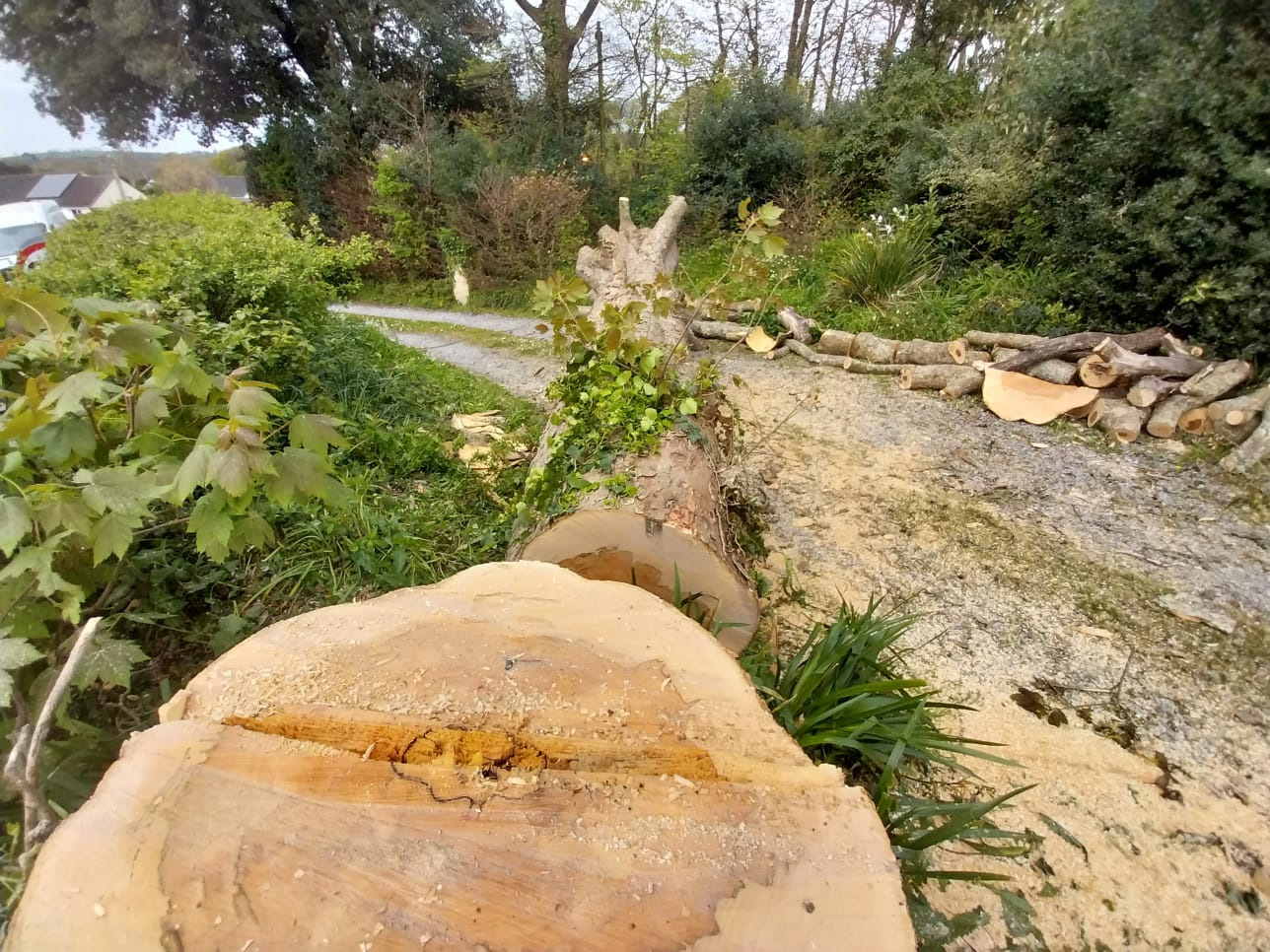
The method used depends on the tree’s size, condition, and available space. For open areas with sufficient clearance, tree felling allows the tree to be brought down in a single, carefully controlled movement. This approach is efficient and effective when conditions allow.
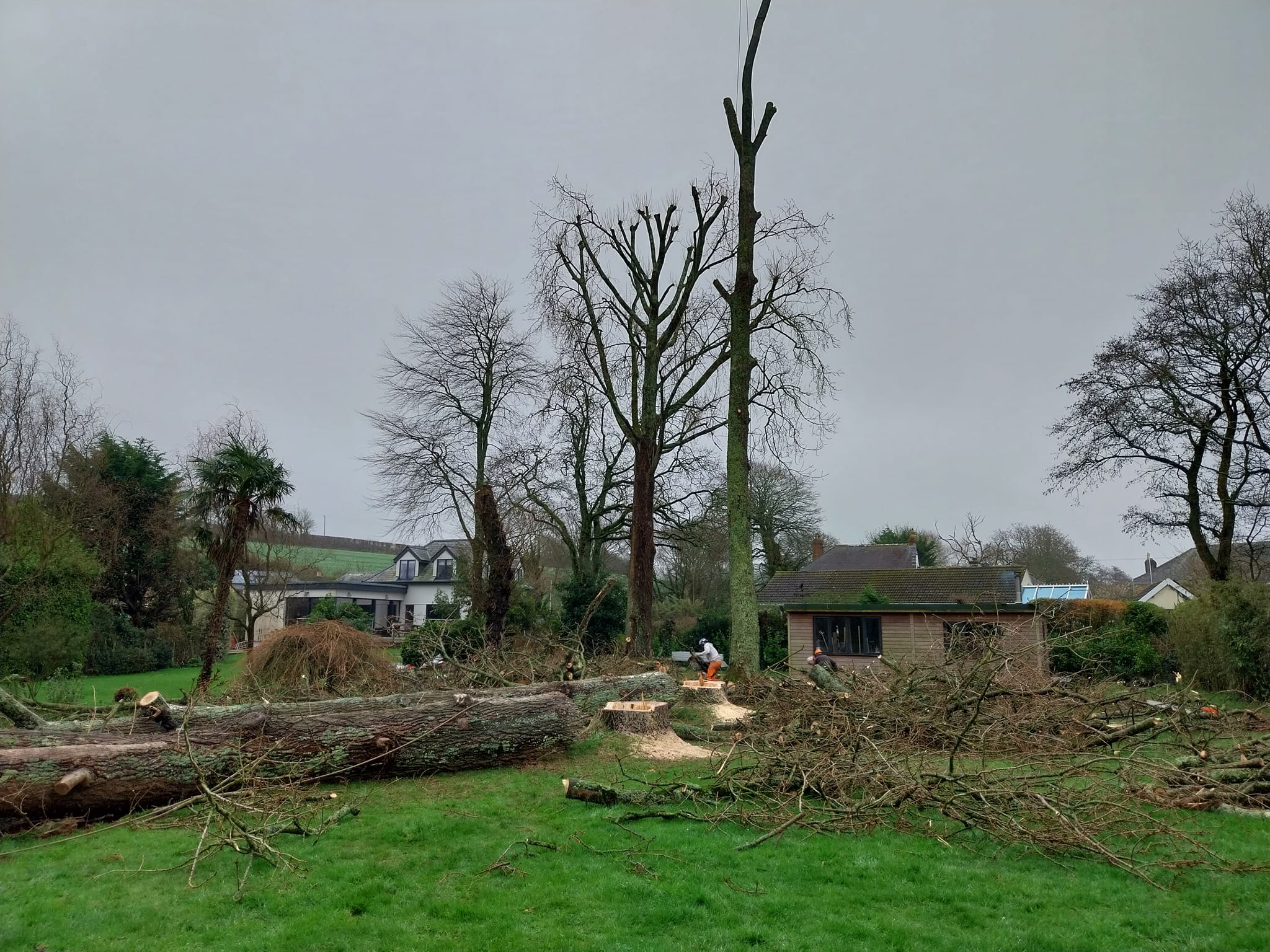
In more confined settings, such as residential gardens or built-up areas, we use controlled tree removal techniques. This involves dismantling the tree in sections and safely lowering branches and timber to the ground using ropes and rigging systems. Precision and planning are essential, particularly near buildings, fences, or neighbouring properties.
Where access or layout demands it, crane-assisted techniques may also be used to improve efficiency and reduce strain on surrounding ground and structures.
Tree Cutting & Clearance for Domestic & Commercial Sites
Our work covers a wide range of settings, from private gardens in Torbay to commercial land in Kingsbridge and managed estates throughout South Hams. Tree cutting and tree clearance services are carried out with equal attention to safety, cleanliness, and compliance.
Sutton Arboriculture regularly assists with:
- Clearance ahead of construction or landscaping projects
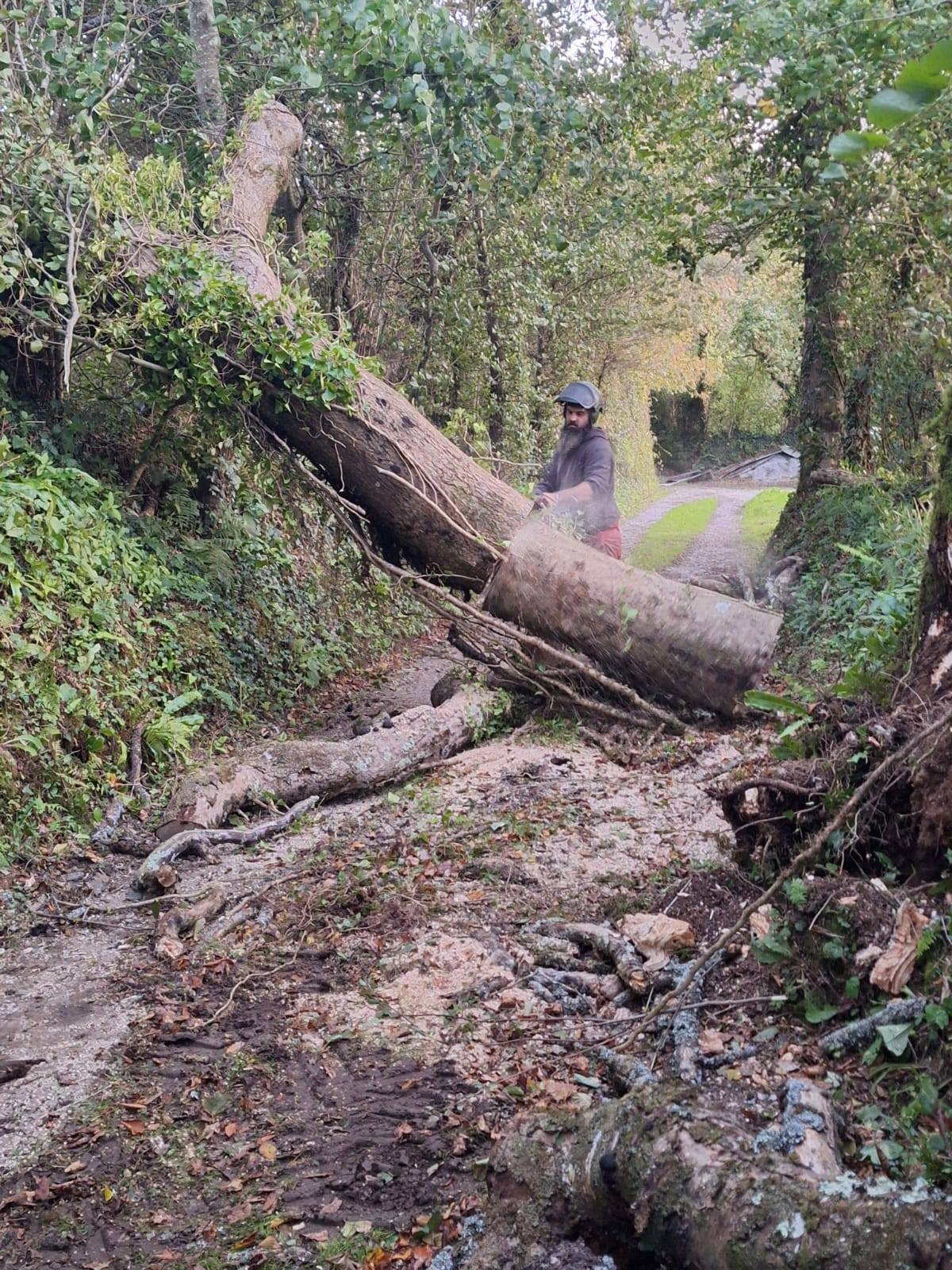
- Removal of storm-damaged or fallen trees
- Managing trees that pose a risk to public access areas
- Preparing land for fencing or boundary work
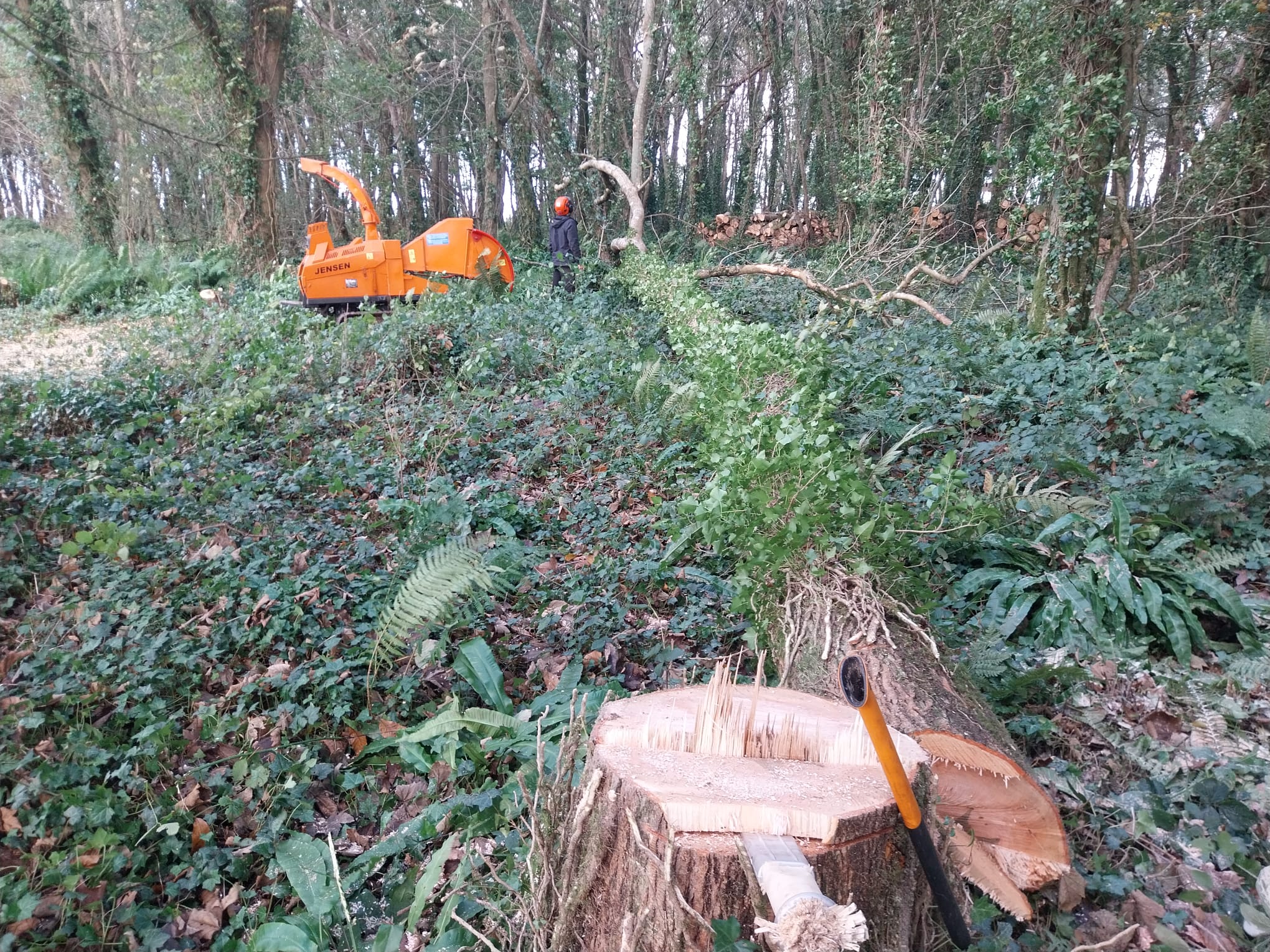
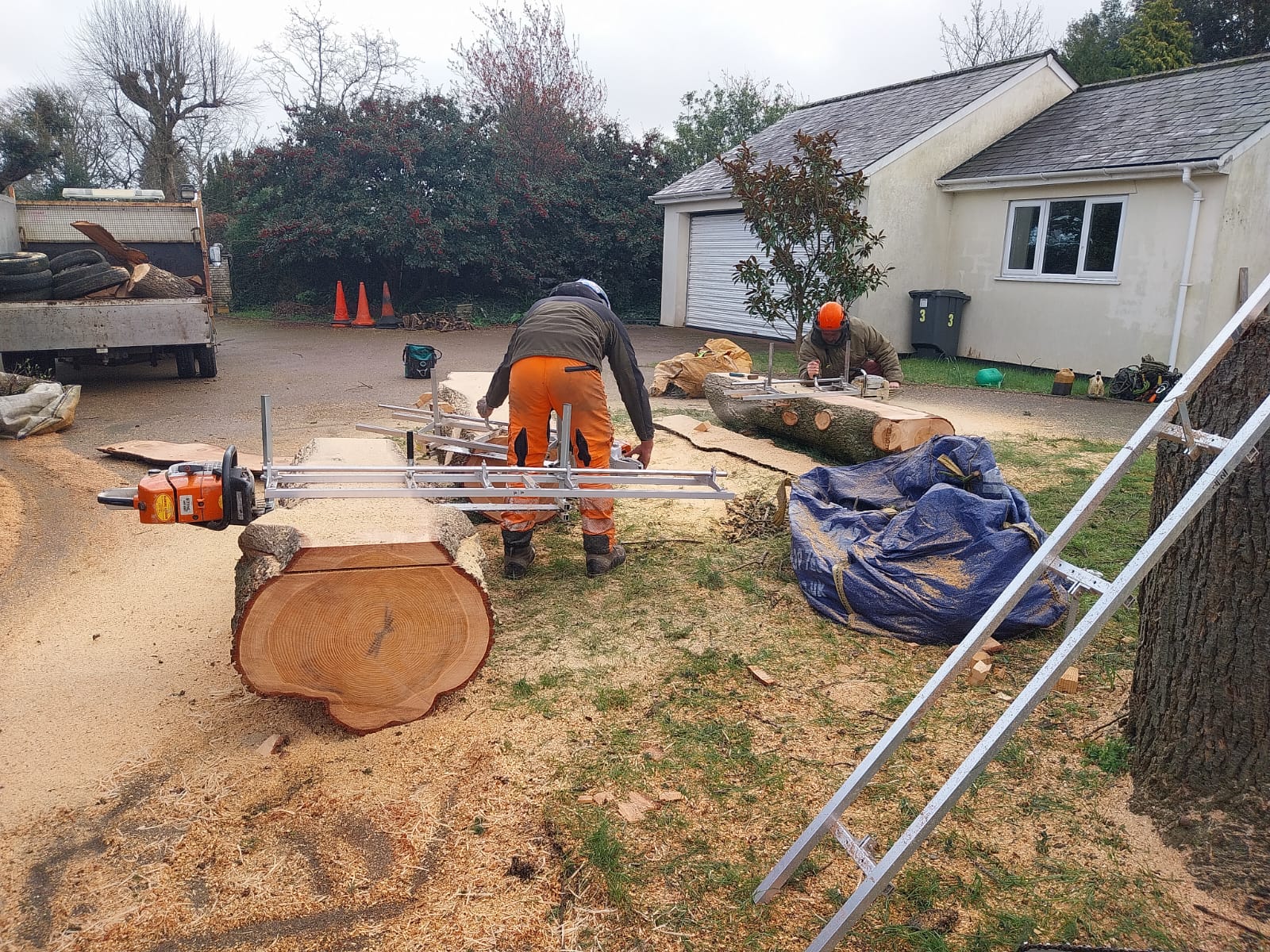
All arisings are handled responsibly, and sites are left tidy once work is complete. You can view examples of completed projects in our gallery, which shows the standard of work delivered across the areas we cover.
Legal Considerations & Environmental Responsibility
Tree work in the UK is subject to legislation designed to protect both the environment and wildlife. Before carrying out any tree removal services, we check for Tree Preservation Orders (TPOs), conservation area restrictions, and seasonal wildlife considerations.
Nesting birds, bats, and other protected species must be accounted for, and timing can be critical. Our experience ensures the correct checks are made before work begins, helping clients avoid unnecessary delays or legal issues.
If permissions are required, we can advise on the process and next steps to ensure the work proceeds lawfully and responsibly.
Why Choose Sutton Arboriculture?
Choosing the right tree surgeon is essential for both safety and peace of mind. Clients across Torbay, Kingsbridge, and South Hams value our clear communication, careful planning, and practical approach.
- Over 12 years of hands-on industry experience
- NPTC-qualified and fully insured team
- Techniques tailored to site conditions and access
- Professional, safety-first working practices
- Domestic and commercial expertise
Tree Removal – FAQs
Do I need permission before arranging tree removal?
In some cases, yes. Trees may be protected by a Tree Preservation Order (TPO) or fall within a conservation area, even when located on private land. These protections restrict what work can be carried out without prior approval from the local authority. Before any work begins, we check the tree’s status and advise you on whether consent is required. If permissions are needed, we can explain the process and help ensure everything is handled correctly, avoiding delays or potential enforcement issues.
Can trees be removed safely near buildings or boundaries?
Yes. Trees located close to homes, fences, sheds, or neighbouring properties are removed using controlled methods designed to protect surrounding structures. Rather than felling in one piece, the tree is dismantled gradually, with sections carefully lowered to the ground using ropes and rigging. This approach allows for precise control and significantly reduces risk.
How long does tree removal usually take?
The timescale depends on the size of the tree, its condition, access to the site, and the method required. Smaller jobs may be completed within a few hours, while larger or more complex removals can take a full day or longer. During the initial assessment, we’ll explain what’s involved and provide a realistic timeframe, so you know exactly what to expect.
Is tree removal disruptive?
All work is planned to minimise disruption wherever possible. We carry out a site assessment beforehand, use appropriate equipment for the location, and keep work areas organised throughout the job. Noise and movement are unavoidable to some extent, but once the work is complete, the site is left tidy and safe for normal use.

Speak to Sutton Arboriculture, Your Local Tree Surgeon
If you need professional help with controlled tree removal in Torbay, Kingsbridge, South Hams, or the surrounding areas, Sutton Arboriculture is here to help. To discuss your situation or arrange a site visit, get in touch via our Contact Us page or call 07599 627545 to speak directly with the team.