Tree Removal in South Hams
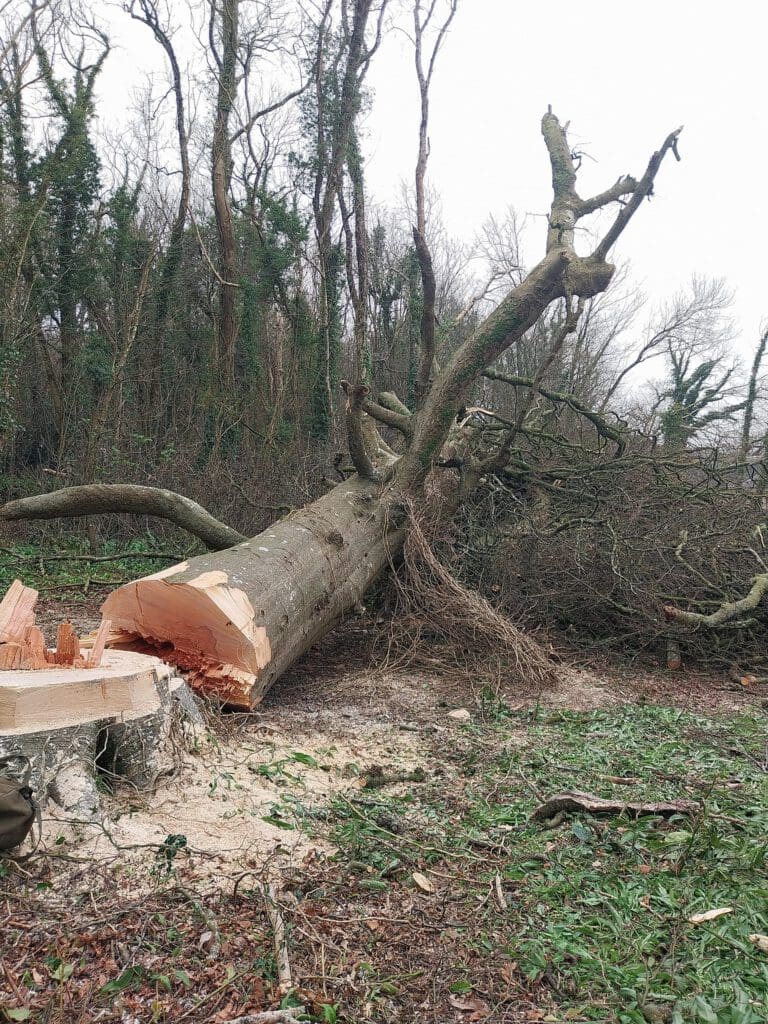
For many property owners, removing a tree feels like something to avoid for as long as possible. Trees are often seen as permanent features, valued for shade, privacy, and character. In reality, there are situations where tree removal is not a failure of care but a necessary step to protect people, property, and surrounding land.
When Tree Removal Becomes the Safest Option Rather Than the Last Resort
Understanding when removal becomes the safest option requires looking beyond appearances and considering structure, location, and long-term risk. As professional tree surgeons covering the South Hams area, Sutton Arboriculture is on hand to offer advice about whether or not a tree can be saved, or if it’s time to go.
We also specialise in a range of tree care services, including stump grinding, hedge trimming, and fencing installation and repair. When it comes to your garden and outdoor spaces, we’re a creative and informed team.
Why Some Trees Become Unsafe Over Time
Even well-established trees can develop hidden weaknesses. Disease, internal decay, root damage, or repeated exposure to high winds can gradually undermine stability. In coastal and semi-rural areas, changing ground conditions can accelerate this process without obvious surface signs.
Our qualified tree surgeons look beyond leaf cover and outward growth, assessing trunk integrity, root spread, and load-bearing structure. When these elements no longer support safe retention, removal may be the most responsible course of action rather than continued intervention.
Delaying Action Often Increases Risk
One of the most common issues with compromised trees is delay. Minor warning signs are easy to overlook, especially when a tree still appears healthy. Over time, however, structural problems rarely resolve on their own.
As risk increases, the complexity and cost of tree removal can rise with it. What might have been a straightforward operation can become a more controlled, time-sensitive task as decay progresses or weather conditions worsen. Acting earlier often reduces disruption and improves overall safety.
Location Matters as Much as Condition
A tree’s surroundings play a major role in decision-making. Trees close to South Hams buildings, access routes, or boundaries carry a different level of risk than those in open ground. Root movement near foundations or interference with overhead lines can make long-term management impractical.
In many gardens, broader changes, such as new layouts or access improvements, influence decisions. Where fencing lines are being repositioned or space is being restructured, retaining a compromised tree may limit future use or introduce ongoing risk.
The Role of Professional Judgement
Not every problem tree needs to be removed, which is why professional assessment matters. A Sutton Arboriculture tree surgeon will evaluate whether pruning, reduction, or monitoring is appropriate before recommending removal. When removal is advised, it’s usually because alternatives no longer offer a safe or sustainable outcome.
This judgement balances safety, environmental responsibility, and practical use of the space. In many cases, careful removal allows surrounding planting to thrive rather than compete with a declining structure.
What Happens After a Tree is Removed?
Once a tree has been taken down, attention often turns to what remains below ground. Roots and stumps can interfere with future landscaping or access, particularly in smaller gardens. This is where stump grinding becomes a practical follow-up, allowing the area to be levelled without extensive excavation.
Clearing the space also opens up new possibilities. Lawns can be reinstated, planting adjusted, or boundaries redefined without obstruction. Coordinating this work avoids piecemeal changes and helps outdoor spaces settle quickly.
Integrating Removal into Further Garden Planning
Tree work rarely exists in isolation. Changes to light levels, shelter, and layout affect the rest of the garden. Following tree cutting and removal, growth patterns often shift, particularly for nearby hedges and planting.
This is why services such as hedge trimming are often reviewed alongside major tree work. Adjusting hedge height or structure can help rebalance the space, preventing sudden exposure or uneven growth resulting from canopy loss.
Safety, Legality & Responsibility
Removing a tree carries legal and environmental responsibilities. Protected species, nesting periods, and planning controls all influence when and how work can be carried out. Professional assessment ensures these factors are considered before action is taken.
Making Informed Decisions Confidently
Tree management is about foresight rather than reaction. Recognising when intervention is no longer enough allows problems to be addressed before they escalate. When supported by stump grinding, hedge trimming, and coordinated boundary work such as fencing, removal can be part of a positive transition rather than a loss.
If you’re concerned about the safety or stability of a tree on your South Hams property and want clear, practical advice, Sutton Arboriculture can help. To discuss whether tree removal is the right option and how it fits into your wider outdoor plans, call us today on 07599 627545 and speak to the team.